Showing posts with label Public Relations. Show all posts

Six Tips for Communicating Change

Over the years, I've been charged with communicating change with masses of people. Difficult changes, like impending mergers & acquisitions, staff reductions and dissolution of major business partnerships.

Here's what I learned: unless the change is an increase in fortune or free desserts for the remainder of time, the first reaction to change is almost always defensiveness and alarm. Human nature, perhaps, but over the years I've learned a few tricks to ease transitions and make change a bit easier:

Six Tips for Communicating Change:
  1. Determine why change is needed. This develops your focus for communications and helps clarify there is an important benefit to the change. (You'd be shocked how many changes are made just for the sake of switching things up. Almost always a dumb move.)
  2. Identify ALL of your audiences. Last year my daughter's school implemented a major overhaul to the carpool system. They failed to communicate the new system to the kids and failed to communicate with parents so we could review with our kids at home. The result was lots of confused, sweaty, hungry, often crying small children packed into a small space at an elementary school. And a whole batch of unhappy parents. Sounds fun, yes? Make sure you've thought through every single audience the change will impact and develop a strategy for communicating with each one.
  3. Communicate their benefit first, not yours. Starting a communication with "how this change helps the company" just stirs a sense of injustice amongst the masses. You must first communicate how this change helps your audience. Give 'um a cause they can get behind -- or at the very least not argue against. 
  4. Communicate early. Get cracking on a clear communication about the change, along with a timeline, as soon as your strategy is set. The longer people have to wrap their heads around change, the better they tend to accept it. 
  5. Communicate often. Update your audiences on the process. Share the victories, address the issues, and ask for continued patience. When people hear updates, they are more likely to support the change throughout the process. 
  6. Welcome feedback. Give your audiences an opportunity to voice concerns and offer suggestions -- then address those concerns and suggestions. You don't have to respond to every single complaint, but make an effort to let your audiences know you hear them. Even if you don't make the changes they request, it helps them to know you are listening.
Have you recently had a change (maybe from your company, your bank, or your kids' school) communicated with you? Did they do a good job communicating the change? Why or why not?
2012amymacsignaturefinal

How to Stay Focused in a Presentation

Have you ever had a conversation with someone and walked away thinking "I'm so confused"?

Have you ever had an in-depth conversation with someone and walked away thinking "I totally get it"?

Whether you're giving a work presentation, talking with your doctor, or debating an issue with your spouse, anytime you're having an important conversation, you need two things so you can successfully fall into that "my audience totally gets it" camp:

Key messages and soundbites. What are these and why are they so important?

In my nearly 20 years (awesome, now I sound like I'm 97 years old) of working with clients on branding and public relations strategy, I've observed even the most polished professionals have a tendency to attempt to tell every single thing they know in one sitting. While they walk away feeling smart and like they really got bang for their buck, they've likely failed to do the most important thing:

Send the audience away with key ideas they can easily remember.

Key messages are the point of your meeting, presentation, letter or conversation -- the ideas you must convey to your audience. You are allowed three. More than three and you need to set up an additional appointment. Why? You're subjecting your audience to information overload AND you will lose your focus. So, commit to your three or fewer messages and jot those down.

Next, take the three key messages and distill a few words into soundbites. A soundbite is the essence of your key message, made irresistible to the audience. 

For example, if your key message is this:

As a family, it would be helpful if everyone could pitch in to clean the kitchen after dinner before moving on to other activities.

The soundbite is this:

No one has fun 'til the kitchen is done!

What if you are giving a presentation to a potential client? If your key messages are:

--You need someone who can implement strategy quickly, and we have experience in your industry.
--Our company has developed a system with a 98% success rate.
--Our streamlined system saves money.

The soundbite is this:

You need fast results. We have a plan and proven success. Let's get started. 

Present your key messages and soundbites then zip it (as explained here.) Redirect the conversation back to your messages and repeat your soundbites often -- you'll be surprised how effective this strategy is in business and in life.


2012amymacsignaturefinal

How to Convert Media Coverage Into Sales? Carpe Diem, Folks.

Two questions I'm frequently asked: how do I get more publicity, and once I do how do I convert the publicity to sales?


To answer the first question: be nimble.

The answer to the second: be nimble.

There's a tendency with publicity to become so busy creating newsworthy items, we are woefully unprepared for the opportunities that fall into our laps. The result being we are stuck in a conference room debating metrics or in back-to-back sales calls ... while a golden opportunity languishes, then disappears. We may make one sale, but we've let scores more slip away.

So how do we seize the day when it comes to a plum marketing opportunity? Like when a celebrity is photographed using your product, or a client demonstrates your product on a national news program, or you're quoted as an expert in the local paper? Here are 5 tricks to being ready to convert publicity into sales:

1. Look for opportunities. Read the paper, read blogs, watch the news and be a trend observer. You'll be surprised at how many possibilities to link your product with a leading news organization or personality lurk out there if you're just paying attention.

2. Have a template news release and email at the ready. If you're trying to write general company information for a news release or you're uploading client email addresses at the last minute, you're wasting precious time connecting with the story. Set up these essential building blocks now so when the time comes you simply drop in the relevant information and hit send.

3. Drop everything and PUSH. I know. You have a packed day. Meetings. Sales pitches. 175 emails to comb through. Figure out which of those things will be there tomorrow and reschedule. Go in early. Stay late. Do whatever it takes to capitalize on a real publicity opportunity. Trust me, this is your priority for the next 24 hours.

4. Hire help. If you don't know how to craft an eye-catching headline and news release, hire someone who does. Seriously. Anybody. Hire someone in direct competition with me for all I care but please, please don't squander an opportunity to build your loyal customer base because you didn't take the time to do it well.

5. Reuse and recycle. Post the information to your website, blog, your newsletter, all your social media, print it on pretty little postcards, make bumper stickers ... whatever floats your boat, but don't send a news release to the media and call it a day. Take the time to package your publicity success, then maximize your exposure through whatever channels possible.

If you consistently use these five steps of seizing publicity opportunities, the sales will follow. Why?  Because positive media coverage is one of the best third-party endorsements you can get, even if they haven't specifically endorsed your product. Endorsements build credibility, credibility builds trust, trust builds loyalty, and having a loyal customer base singing your praises will increase your sales.
Amy M. Dawson is a PR & brand strategist, business writer, newspaper columnist and humor writer. She’s helped hundreds of professionals — from Fortune 500 CEOs to politicians and entrepreneurs— craft their brands. For more information, contact her at amy@amymacwrites.com.
2012amymacsignaturefinal

Photo Source: 9gag.com via Judith on Pinterest


I Heart Magazines (Especially Ones With Hearts on the Cover)

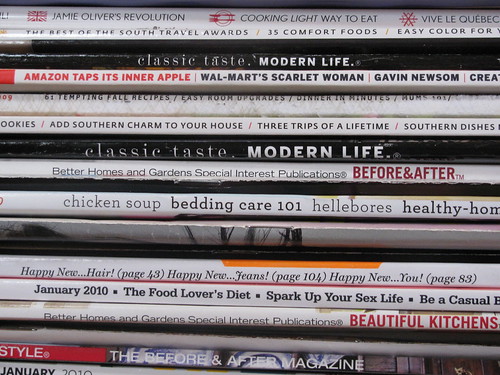
This being February, the month of love and whatnot, I thought I'd confess - I love, love, love magazines. Love them. Love the waterfall of colors jumping out from each page, love the way a funky font can set the tone for a whole story, love the inspiration from well-written editorial.


That giant stack you see above? Those are just the magazines in the family room by the fireplace ... there's another stack on my bedside table, yet another in a basket in the living room, and a couple in the front seat of the car to entertain me while waiting in the carpool line.


Magazines are also a wonderful spot to get a little inspiration for stories to pitch. It's like a little focus group, free of charge, about what your target audience is reading.


What's your favorite magazine for inspiration?


Glass Half Empty


You’ve probably seen the news about how a promotional photo taken of Air Force One with the Statue of Liberty in the background (and a fighter jet at the wing) has caused fury and backlash with politicians and New Yorkers, and has people all over the world scratching their heads wondering why someone didn’t think this little photo opportunity through a bit more thoroughly. If you’ve not seen the story, read about it here.

The gist: the promotional photo was a jumbo jet, with a fighter jet alongside, flying low – really low – near the NYC skyline – causing panic, with folks evacuating skyscrapers with Sept. 11 on their minds.

This snafu is now being described as “Felony Stupidity.” (Not to make light of the situation, but I totally plan to use that term in the future.)

Just last post I wrote about crisis communications, and how important it is to have a plan in place for “just in case.” Call it ESP (okay, sheer coincidence) but when you are developing any sort of publicity plan – and in that I’ll include photo shoots– you must look at it from all sides. Even when you’re pitching a positive story, put on your devil’s advocate hat and look at all the parts of the plan from all potential angles – good and bad.

It’s easy to get caught up in an exciting story, but not thinking of potential negative angles to any story is risky at best – and a negative international news story at worst.

First Pitch

I recently got a call from a colleague with a question about reporters – specifically, if there are two (or more) covering your industry – a common occurrence with major metropolitan newspapers - how do you determine which reporter to send your news release?

There’s a simple solution: go to the media outlet’s web site and do a search for the reporter’s name. Read her last five articles. Then go to the next reporter and do the same, and keep going until you start to see a pattern – and you will start to see a pattern. Most reporters have their “hot spots” within their industry, a topic they write about often, a cause they are quick to cover, types of events and news they seem to prefer.

Your job is to determine which reporter your piece of news fits best, and craft a pitch that lets the reporter know you’ve been reading his articles (you know what they say about flattery.)
A well-written news release sent to the right reporter with a succinct pitch will go miles toward getting favorable publicity, so remember to do your due diligence before you hit send on that e-mail button!

Fast Pitch

I recently pitched and landed a cover story in a local publication for a client. The cover picture is beautiful, and the article is well-written, and it will likely garner additional attention and business for this client.

So the big question: what can this client do to really maximize all the terrific publicity from this one article?

My advice to clients who have landed the publicity they’ve been seeking is to make sure their coverage gets into the hands of everyone you want to see it – not just the folks who happen to pick up the paper that week!

· Send a copy of the article, along with a cover letter, to your mailing list of your best customers, potential customers, business associations, alumnae magazines, mentors – pretty much everyone on your list (you’ll need to get reprint permission from the publication before making copies of the article. Some publications charge a nominal fee for this, and if you’ll just be mailing a few you can always purchase extra copies. )

· Post the article on your web site

· Create an e-mail signature with a link to the coverage

· Take a color copy of the article and adhere it to a fiberboard stand (you can buy these inexpensively at office supply stores) and place it wherever your customers will most likely see it, or frame it and hang it in a well-exposed spot

· Create small labels with the web site address to adhere to the back of 30 to 40 business cards

If you are wondering how I landed this article, stay tuned. I’ll post the pitch I wrote to the editor and point out a few key items, so if you are planning to pitch a story to your local paper, follow my tips and you’ll increase your chances of success!

Sprinkles and Caffeine: What Every Voter Needs

I have written before about the importance of tying your publicity efforts into the current headlines, and today I witnessed a perfect example of how three companies (and I am sure many, many more) are taking the Election Day headline and using it to their advantage.


The question of the (election) day: what do donuts, coffee and ice cream have to do with the election? And, no, the answer is not “the new president will need caffeine and comfort foods to deal with the stresses of his new job.” But that was an excellent guess.

The answer is … if you are voting in this election, swing by Krispy Kreme for a free star-shaped donut with sprinkles, hit your local Starbucks for a gratis cup of coffee, and stop at your local Ben and Jerry’s for an on-the-house scoop of ice cream.

None of these companies has a direct connection with the election, public policy, voting, candidates, or drawing party lines – but each received a high-profile mention on The Today Show. Connecting their product with THE headline of the day will drive traffic into their stores, will likely increase sales, definitely saved them thousands of dollars in advertising, and is building goodwill with lots of Americans who’ll need a little boost after standing in line for hours to do their civic duty.

In the south we advise our children never to ask someone how old they are, how much they weigh, or for whom they will cast their vote. All I know is that I’m old enough to vote, so I did. And I will likely weigh more after a scoop of ice cream and a donut. And I’ll probably be up late watching returns, so I’ll wait until this evening for my free cup of coffee.

Happy Voting!